Pet-Resistant Retractable Screens
What pets actually do to screens, how pet-resistant mesh and mesh retention differ, which of the two you need, and what each costs.

Pets damage screens in two distinct ways, and the fixes are different. Buying the wrong one is why some households end up replacing mesh twice.
The Two Failure Modes
Pushing the mesh out of the track. A dog leans against a deployed screen, or shoulders through expecting it to open, and the mesh comes out of the side channel. This is not a tear — the mesh is undamaged, it is simply no longer where it should be.
It is also progressive. Reseating mesh repeatedly stresses the edge, and that edge is where a tear eventually starts.
Tearing or puncturing the mesh. Claws catch the weave, a cat climbs it, or a determined dog gets a paw through. This is actual damage to the fabric.
Two problems, two solutions — and most households with pets need one of them, not automatically both.
Mesh Retention: For the First Problem
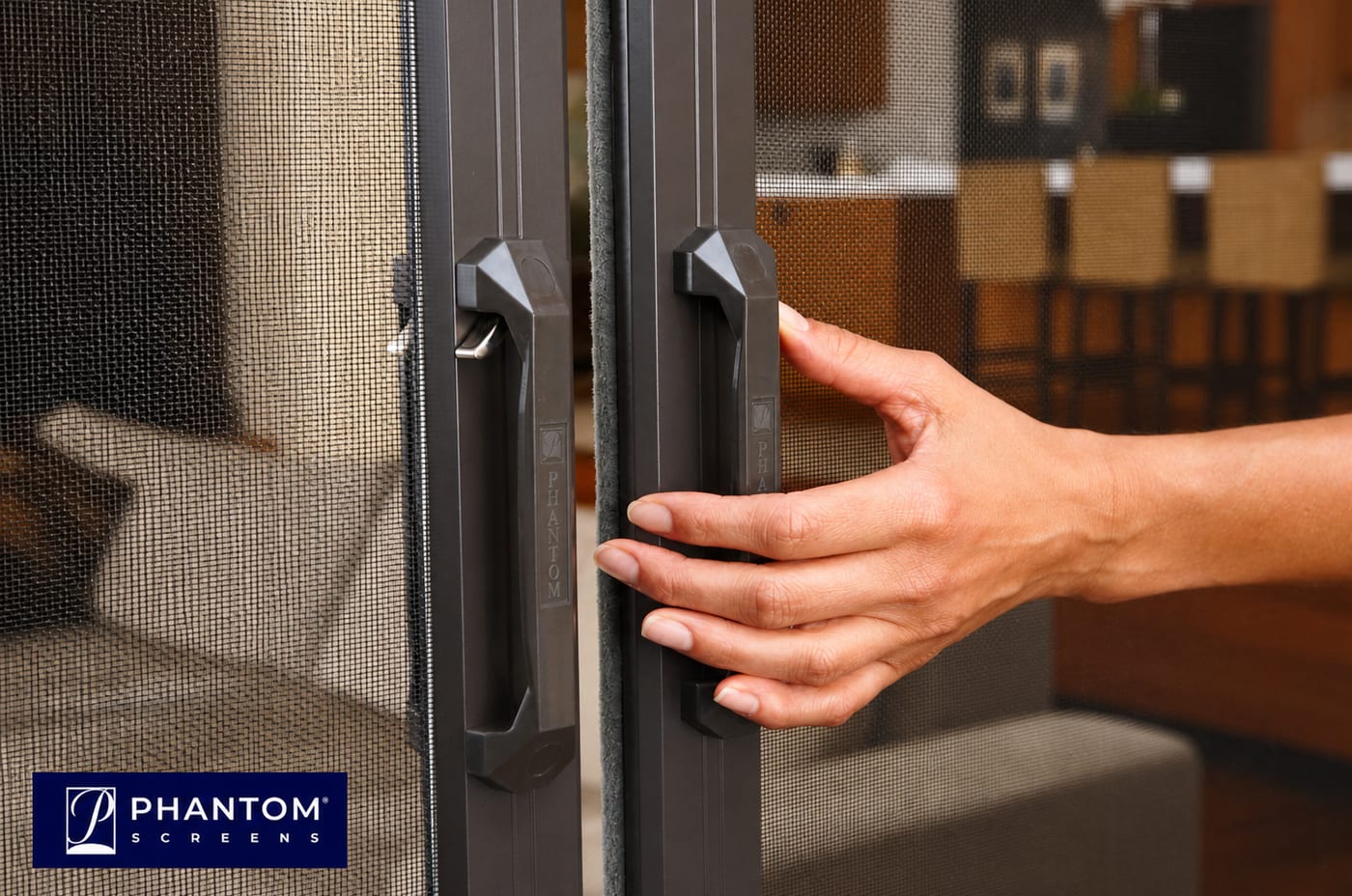
Mesh Lock secures the mesh into the track edges so it resists lateral pressure. Rather than floating in the channel where a shove can displace it, the mesh is held.
It adds $250 on a single and $500 on a double, and it is handled within the configuration on large-opening systems.
For most pet households this is the more important of the two, because leaning and pushing is far more common than clawing. On the patio door a labrador uses as a doorway several times a day, it is usually the single best-value line in the quote.
Pet-Resistant Mesh: For the Second Problem
A heavier, vinyl-coated weave built to resist punctures, hold its shape under pressure, and avoid fraying when scratched.
This is what you want where the animal actually attacks the mesh — a cat that climbs screens, or a dog that paws at it rather than simply leaning.
The trade-off is visibility. Pet-resistant mesh is visibly heavier than standard, so the view through it is less clear. On a feature door with a view worth keeping, that matters, and it is worth weighing rather than defaulting to the toughest option available.
Which Do You Need?
Worth thinking about what your animal actually does.
A dog that leans, pushes, or barrels through — Mesh Lock. The mesh is not being damaged, it is being displaced.
A cat that climbs — pet-resistant mesh. Claws in the weave is a fabric problem.
A dog that paws or scratches at the screen — pet-resistant mesh, and Mesh Lock alongside it if the door is high-traffic.
A calm animal that ignores screens — neither, honestly. Plenty of pets never touch them, and specifying for a problem you do not have is money spent on view clarity you have given away.
The Training Point Worth Making
A screen that is nearly invisible is a screen an animal will walk into, and that is where a lot of first-time damage comes from.
The retractable design actually helps here in a way fixed screens do not. Because the screen is only deployed when in use, animals encounter a consistent state — open doorway or screened doorway — rather than a permanently semi-visible barrier. Most adapt within days.
Where a dog is used to an always-open door, the first week is when damage is most likely. Deploying the screen while you are present, so the animal learns it exists before testing it unsupervised, avoids most of that.
What Happens When Mesh Does Get Damaged
The design assumes this will happen eventually, which is why the mesh and the structure are treated separately.
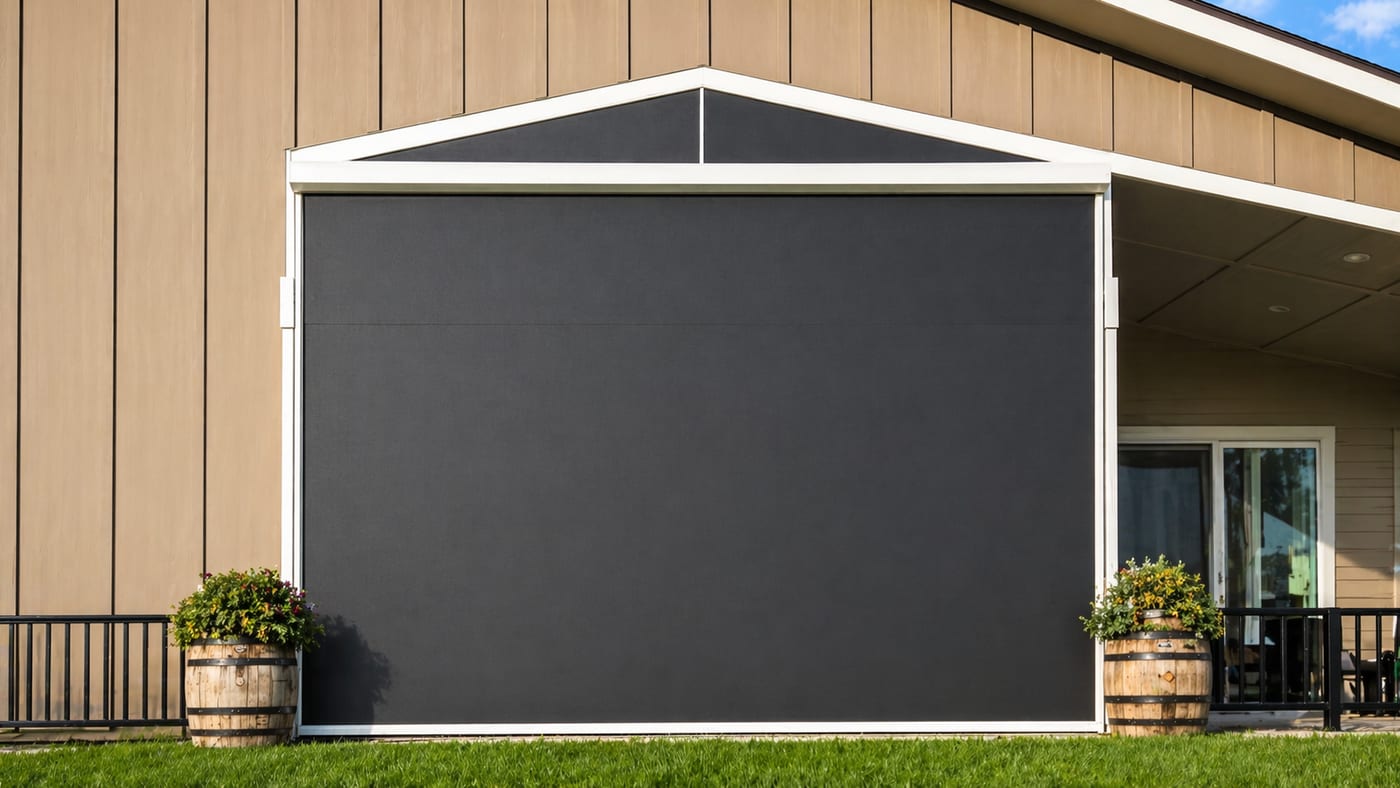
Mesh is replaced independently — the housing, tracks and hardware stay exactly where they are. That is a service appointment at $260 on a standard single or $290 on a custom 8-foot single, rather than a new installation.
It is also the natural point to change specification. If the original screen went in before the dog arrived, replacement is when you add mesh retention or move to pet-resistant mesh rather than repeating the same setup.
Why the Retractable Design Helps With Pets
Worth understanding, because it is a genuine advantage over a fixed screen rather than a marketing point.
A permanently installed screen is a permanent target. It is there whether anyone is home or not, whether the door is in use or not, and an animal left alone with it all day has unlimited opportunity to lean, scratch or test it.
A retractable screen is deployed only when someone is using the space. That alone removes most of the unsupervised hours in which damage happens. When the household is out and the screen is retracted, the mesh is inside its housing where nothing can reach it.
The secondary benefit is that mesh spends far less time exposed to UV and dust, so it arrives at any given moment of pet contact in better condition than a fixed screen of the same age would.
Screens and Cats Specifically
Cats present a different problem from dogs, and it is worth separating.
A dog's damage is usually force applied once — a shove, a push through. A cat's is repeated and deliberate: claws in the weave for grip, often climbing. That is a fabric-integrity problem rather than a displacement one, which is why pet-resistant mesh is the relevant answer rather than mesh retention.
There is also a safety consideration worth stating plainly on upper floors. No screen of any kind — conventional or retractable, standard or pet-resistant — is a barrier, and a cat pushing against a screen on a second-storey window is a real risk. Screens keep insects out; they do not keep anything in.
Which Doors Actually Need It
Rarely all of them, and this is where households over-specify.
The door the animal uses is the one that matters — usually the patio door or back door. Front doors, side entries and bedroom windows are frequently untouched by pets entirely, and specifying pet-resistant mesh there trades view clarity for a benefit you will never see.
Because mesh and options are specified per opening, the patio door can carry pet-resistant mesh and Mesh Lock while everything else runs standard insect mesh at no penalty.
Keeping a Pet Door in the Picture
A question that comes up on households that already have a pet door in the main door, or are planning one.
The two are independent. A pet door sits in the door itself; a retractable screen mounts to the frame and travels across the opening in front of it. Where an animal uses a pet door in a slider or entry door, the screen is deployed across the whole opening as normal and the pet door continues working behind it — the animal simply passes through the mesh line rather than around it, which is exactly the situation mesh retention exists for.
Where a household is planning both, it is worth mentioning at the measurement. Position matters, and knowing an animal will be pushing through at a particular height on a particular side changes the recommendation on retention and mesh weight.
What It Costs
Mesh Lock adds $250 on a single and $500 on a double. Pet-resistant mesh is specified as part of the mesh selection during the consultation.
Base prices are unchanged: a single retractable door screen from $989 installed, a double French pair from $1,949, both including custom fabrication and professional installation.
Full pricing is in What Phantom Screens Cost.
Next Steps
For the full range of mesh types, read Screen Mesh Options Explained. For what happens when mesh reaches the end of its life, see When to Replace Your Screen Mesh.
Request a free quote — mention the pets, because it changes the recommendation more than almost anything else.
Starting prices are current for Phantom Screens of Twin Falls and include professional installation. Final pricing is confirmed after an in-home measurement.
Frequently Asked Questions
Are retractable screens pet-friendly? Yes, with the right specification. Mesh retention stops the mesh being pushed out of its track, and pet-resistant mesh resists punctures and fraying — they solve different problems.
What is the difference between Mesh Lock and pet-resistant mesh? Mesh Lock secures the mesh into the track edges against lateral pressure. Pet-resistant mesh is a heavier weave that resists claws and tearing. Leaning dogs need the first; climbing cats need the second.
How much does Mesh Lock cost? $250 on a single and $500 on a double. On large-opening systems it is handled within the configuration.
Does pet-resistant mesh affect the view? Yes. It is visibly heavier than standard mesh, so view clarity is reduced. Worth specifying only on the doors your pet actually uses.
Will my dog learn not to run into it? Most adapt within days. Deploying the screen while you are present during the first week, so the animal learns it exists before testing it alone, avoids most early damage.
What if the mesh gets torn anyway? It is replaced independently of the structure — a service appointment from $260 on a standard single, and the natural moment to upgrade the specification.
Tags
Written by
Phantom Screens of Twin Falls Team
Custom retractable screen solutions for homes across Idaho and Western Wyoming.
Related Articles

Screen Mesh Options Explained
Insect, solar, privacy, no-see-um, pet-resistant and clear vinyl — what each does, what it trades away, and how to match one to a specific opening.

Retractable Screens for Large & Oversized Openings
Openings past 96 inches need a different system. What covers up to 15 feet wide and 12 feet high, how spans divide, and what oversized systems cost.
How to Choose a Retractable Screen
A practical decision path — which openings to screen, single or double, manual or motorized, which mesh, and which upgrades earn their cost.
Interested in Retractable Screens?
Get a free quote for custom Phantom retractable screens — motorized, door, or window screens for your home.
Get a Free Quote