How to Choose a Retractable Screen
A practical decision path — which openings to screen, single or double, manual or motorized, which mesh, and which upgrades earn their cost.

Most of the decisions here are made for you by the opening itself. Work through them in order and the specification falls out at the end.
Step 1: Which Openings Are Worth Screening?
Not all of them, and this is where money is most often misdirected.
Worth doing: the doors you use daily, particularly the patio door; bedrooms, where night air is the point; kitchens, for ventilation; and any opening on a view worth preserving.
Usually not worth doing: rarely-opened windows, basement egress, obscure-glass bathroom windows, and utility doors with nothing to look at. A conventional screen serves those adequately.
Screening the openings you actually use first, and phasing the rest, is entirely reasonable. Having everything measured in one visit means later openings are quoted accurately when you get to them.
Step 2: What Kind of Opening Is It?
This determines the product and most of the price.
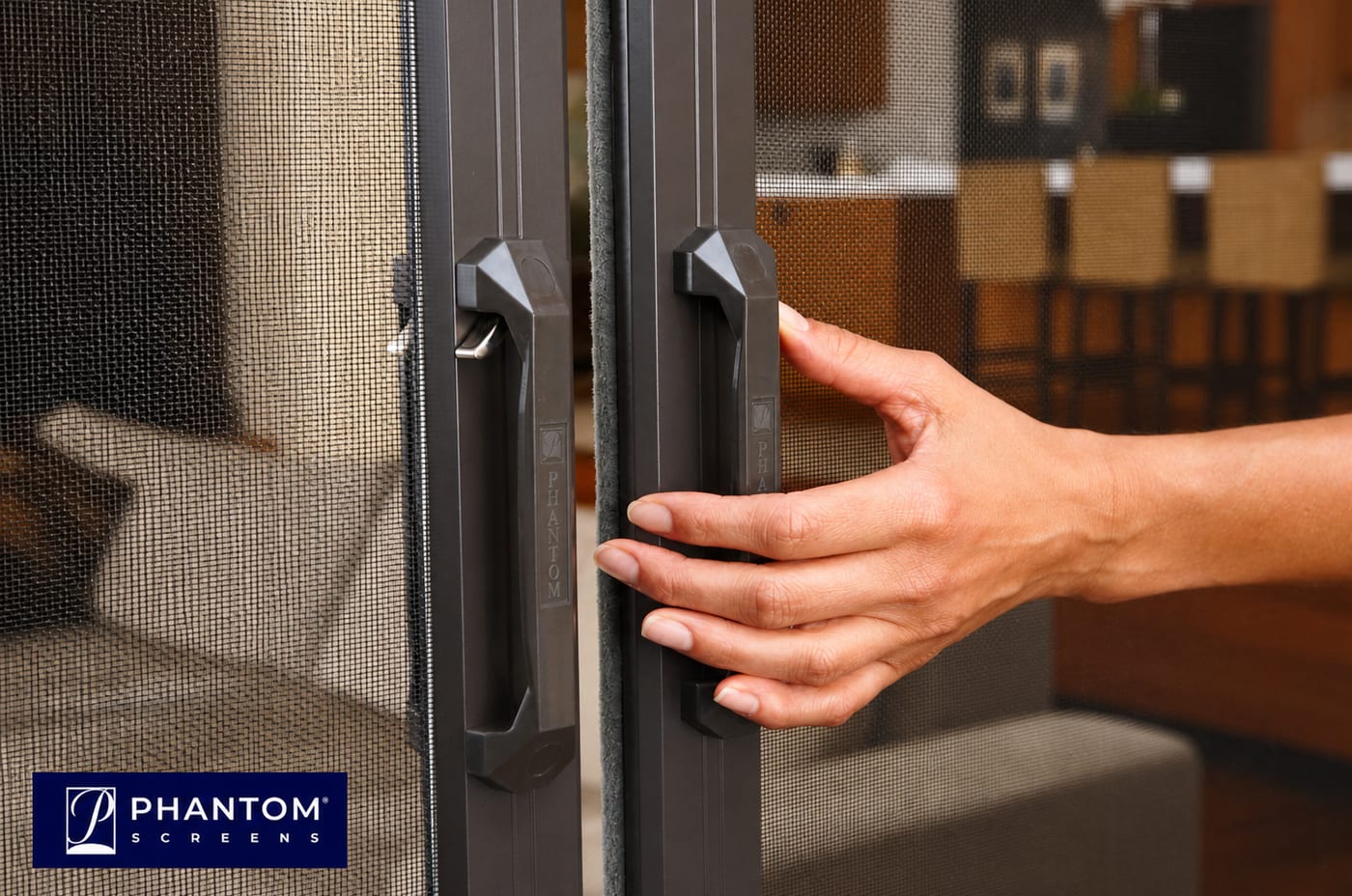
One panel that opens — a single entry door, back door, or standard slider — takes a single screen, from $989.
Two doors meeting in the middle — a French pair — takes a double, from $1,949. Two screens built as a matched set to meet and seal at the centre.
Wider than 96 inches — multi-panel sliders, bi-folds, stacking walls, covered patios — moves to a large-opening system, covering up to 15 feet wide and 12 feet high in a single screen, from $4,200.
If you are unsure which you have, the test is how many panels actually move.
Step 3: Manual or Motorized?
On door-sized openings, manual. A single or double operates easily with one hand, and motorizing a normal patio door is the most common way people spend without improving the result.
On large openings, four things push toward motorized at $5,400 against $4,200 manual:
Width — walking a slide bar fifteen feet several times an evening gets old. Height — tall openings are hard to operate evenly by hand. Frequency — daily summer use justifies it; occasional use does not. Exposure — a wind sensor retracts the screen automatically when gusts arrive, including when nobody is home, which on an exposed site is protective rather than convenient.
Step 3b: Door Screen, or Screen the Space?
Worth separating explicitly, because these get conflated constantly and they are different purchases.
A door screen screens the doorway between house and outside. It keeps insects out of the house, and it is what most people mean when they start looking.
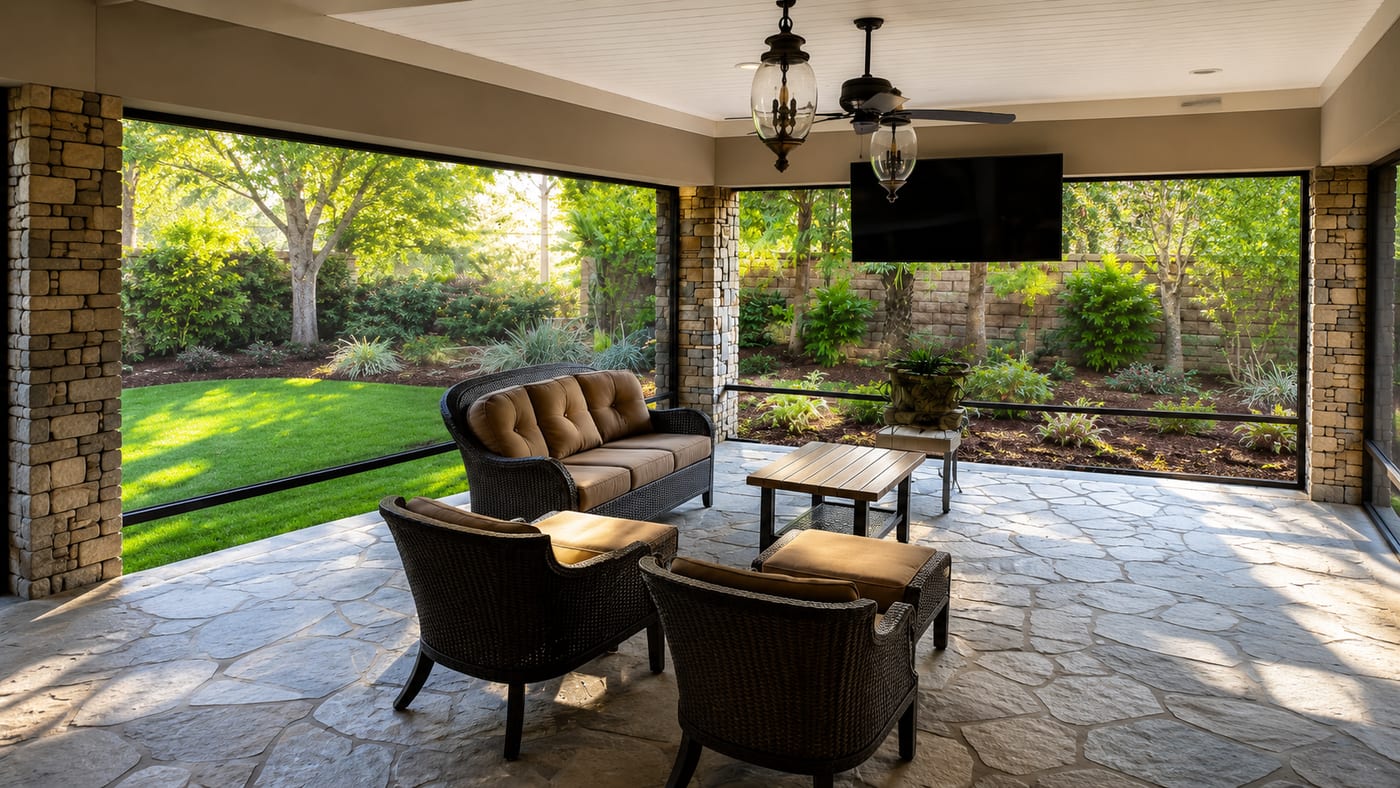
A large-opening system screens an outdoor space itself — closing the open sides of a covered patio so the space becomes usable rather than merely accessible.
The question that separates them: is the problem that bugs are getting into the house, or that the patio is unpleasant to sit on? A door screen solves the first and does nothing for the second, no matter how good it is.
The prices differ accordingly — $989 for a single door against $4,200 for a large-opening system — so getting this right early prevents a quote that comes as a surprise.
Step 4: Which Mesh?
Chosen per opening, not per house, and this is the decision that cannot be changed later without a mesh replacement.
Standard insect mesh — maximum airflow, clearest view. The right default for shaded and north-facing openings, and included in the price.
Solar mesh — blocks a substantial share of heat, UV and glare. Worth it on south- and west-facing openings, which take direct high-desert sun through the afternoon here.
Privacy mesh — daytime screening from outside while keeping your view out. For overlooked lots.
No-see-um mesh — a tighter weave excluding the smaller insects standard mesh admits. Near the Snake River, canals and standing water.
Clear luxury vinyl — not mesh. Blocks wind and holds warmth for shoulder-season use on covered outdoor spaces.
Step 5: Which Upgrades Earn Their Cost?
Mesh Lock — $250 on a single, $500 on a double. Secures the mesh into the track edges against lateral pressure. On a high-traffic door with pets or children, usually the best-value line in the quote. On a door nobody leans on, unnecessary.
Wind sensor (motorized only) — on exposed sites, frequently the argument for motorizing at all.
Sun sensor (motorized only) — comfort rather than protection. Useful on west-facing spaces.
One adjustment to anticipate rather than choose: openings roughly 96¼ to 120 inches tall carry a $200 adjustment for the extra material and drop.
Step 5b: Sequencing a Whole House
Few households screen everything at once, and phasing well is worth a moment's thought.
The order that tends to work is: the patio door first, because it takes the most traffic and usually the most sun; then bedrooms, because night air is what people miss; then secondary doors; then remaining windows.
Where there is a covered patio worth using, that is a separate decision running alongside the doors rather than competing with them — it is a different product solving a different problem, and it usually costs more than every door in the house combined.
The one thing worth avoiding is measuring piecemeal across months. Openings get quoted in isolation, mesh choices drift out of alignment across the house, and you pay for repeat visits a single assessment would have covered.
Step 6: Sanity-Check the Result
Before ordering, three questions.
Does the mesh match the exposure? Standard mesh on a west-facing patio door is the most common regret, because the room stays uncomfortable through summer afternoons.
Does the retention match the traffic? Declining Mesh Lock on the door a dog uses daily is the second.
Does the operation match the use? Manual on a fifteen-foot patio screened every evening is the third.
Timing the Order
One step that sits outside the specification but affects the outcome.
Every screen is fabricated to its opening, so there is a genuine lead time between measurement and installation. Demand also concentrates sharply — the first properly warm stretch of the year is when most people decide they want screens, and that is when the calendar fills.
Starting in late winter or early spring means installing before the season rather than partway through it. A patio door screened in May delivers a full summer; the same order placed in July delivers considerably less of one.
What the Measurement Adds
A quote visit is worth treating as part of the decision rather than a formality, because several things get settled there that no amount of reading resolves.
Whether each opening is square, and how much it has moved. How much frame depth exists, which decides whether the housing sits in-jamb or surface-mounts — a visible, permanent difference. Which way doors swing. Threshold condition.
It is also where mesh gets decided properly, with physical samples at the opening in its actual light. Mesh is genuinely hard to judge from a photograph, and it is the one specification that cannot be revised later without a replacement.
What It Adds Up To
A typical household ends up with something like: a patio slider with solar mesh and Mesh Lock, a back door on standard mesh, and — where there is a covered patio worth using — a large-opening system across the outdoor space.
All prices include custom fabrication and professional installation, with a limited lifetime warranty on components, 7 years on motors and 24 months on labor. A $200 deposit starts an order.
Next Steps
For comparing suppliers, read Best Retractable Screen Doors: A Buyer's Guide. For full pricing, see What Phantom Screens Cost. For whether the category suits your opening at all, Are Retractable Screens Worth It?
Request a free quote and a specialist will work through it at the openings themselves.
Starting prices are current for Phantom Screens of Twin Falls and include professional installation. Final pricing is confirmed after an in-home measurement.
Frequently Asked Questions
How do I know if I need a single or a double? Count the panels that move. One operable panel is a single, from $989. Two doors meeting in the middle is a double, from $1,949.
Should I motorize? On door-sized openings, generally not. On large openings, width, height, frequency of use and wind exposure are the four factors that justify it.
Which mesh should I pick? Standard insect mesh for shaded and north-facing openings, solar for south and west, privacy where overlooked, no-see-um near water. It is chosen per opening.
Is Mesh Lock worth it? On a high-traffic door with pets or small children, yes. On a door nobody pushes against, no.
Do I have to do the whole house at once? No. Phasing is common. Have everything measured in one visit so later openings are quoted accurately.
What is the most common mistake? Standard mesh on a west-facing patio door. It works, but the room stays uncomfortable through summer afternoons, and mesh cannot be changed without a replacement.
Tags
Written by
Phantom Screens of Twin Falls Team
Custom retractable screen solutions for homes across Idaho and Western Wyoming.
Related Articles
Pet-Resistant Retractable Screens
What pets actually do to screens, how pet-resistant mesh and mesh retention differ, which of the two you need, and what each costs.

Screen Mesh Options Explained
Insect, solar, privacy, no-see-um, pet-resistant and clear vinyl — what each does, what it trades away, and how to match one to a specific opening.

Retractable Screens for Large & Oversized Openings
Openings past 96 inches need a different system. What covers up to 15 feet wide and 12 feet high, how spans divide, and what oversized systems cost.
Interested in Retractable Screens?
Get a free quote for custom Phantom retractable screens — motorized, door, or window screens for your home.
Get a Free Quote