Are Retractable Screens Worth It?
Retractable screens cost more than fixed screens up front. An honest look at where the money goes, when they pay off in an Idaho home, and when a fixed screen is genuinely the better choice.

A retractable screen costs more than a fixed screen. A single starts at $989 installed; a basic fixed screen does not come close to that. So the question is fair, and the answer is not automatically yes.
Here is the honest version — where the money goes, when it pays off, and the openings where we would tell you to save it.
The Case For
The view is only interrupted when you want it to be
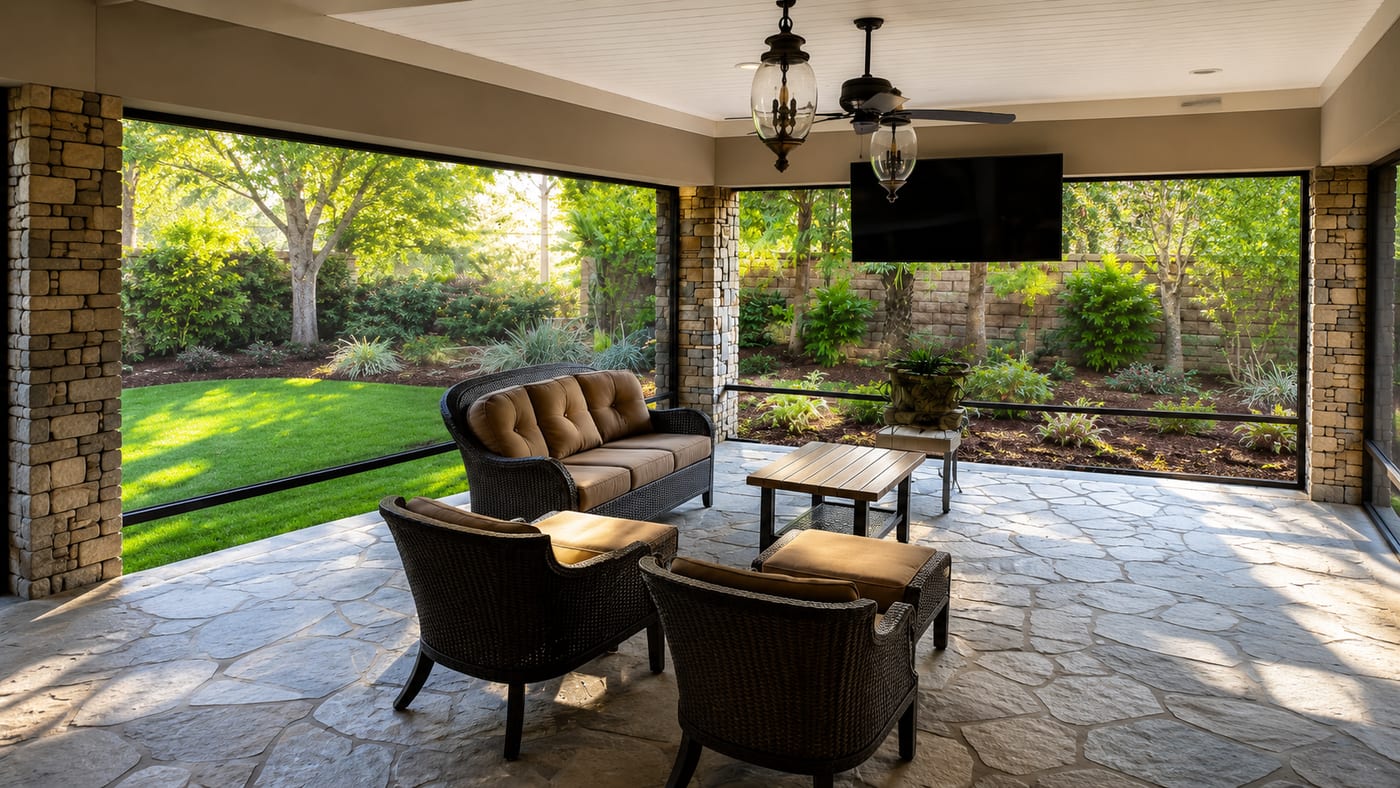
A fixed screen sits in the opening year-round whether you need it or not, greying the view from both sides of the glass. A retractable screen disappears into a slim housing when it is not working.
On a home built around a view — a Wood River Valley great room, a canyon-rim window above the Snake, a wall of glass facing the Tetons — this is usually the entire argument and nothing else needs to be said. People do not spend on big glass in order to look through mesh eleven months a year.
The mesh lasts longer because it is stored
This is the part that is easy to miss and matters most over time.
A fixed screen absorbs sun, wind and grit every hour of every day. A retractable screen absorbs those conditions only while deployed — perhaps a few hours a day, a few months a year. Across southern Idaho's high-desert summers, blowing dust and freeze-thaw winters, the difference in cumulative exposure is enormous.
UV is what turns mesh brittle. Dust is what abrades it. A screen that spends most of its life inside an aluminum housing is simply not accumulating that damage.
It is serviceable rather than disposable
The aluminum housing, track and motor are engineered to outlast the mesh. When mesh eventually reaches the end of its life, it is replaced independently — the structure stays exactly where it is. That is a service call, not a reinstallation.
The warranty states this design openly: a limited lifetime warranty on components, 7 years on motors, 24 months on labor, with screen mesh excluded from the component warranty but always repairable or replaceable.
People sometimes read that mesh exclusion as a gap in the coverage. It is the opposite — it is the manufacturer telling you which part is structural and which part is consumable. A product warranted as one disposable unit is telling you something quite different about how long it expects to last.
It fits openings a fixed screen cannot
Multi-panel sliders, folding glass walls, wide covered patios, oversized entries. Past a certain span, retractable is not the premium option — it is the only option. A fixed screen across a 15-foot opening is not a product that exists in any usable form.
The Case Against
There are openings where a retractable screen is not the right spend, and it is worth being straight about them.
A window you rarely open. If a window gets opened twice a summer, a fixed screen does the job and the retracting mechanism is not earning anything. Spend the difference on the openings you actually use.
A utility opening with no view to protect. A garage side door, a laundry-room window, a basement egress. There is no sightline worth preserving, so the main argument evaporates.
A short-term property. The value of a retractable screen is realised over years of use and at least one mesh service cycle. On a property you are selling next season, that runway does not exist and you will not see the return.
A fully sheltered opening. If a screen sits under deep cover, never takes direct sun, and never sees wind, the durability argument weakens considerably — because the exposure it is being protected from is not there.
Where the Money Actually Goes
"Retractable screen" sounds like it should cost about what a screen costs, so it helps to see what is in the price.
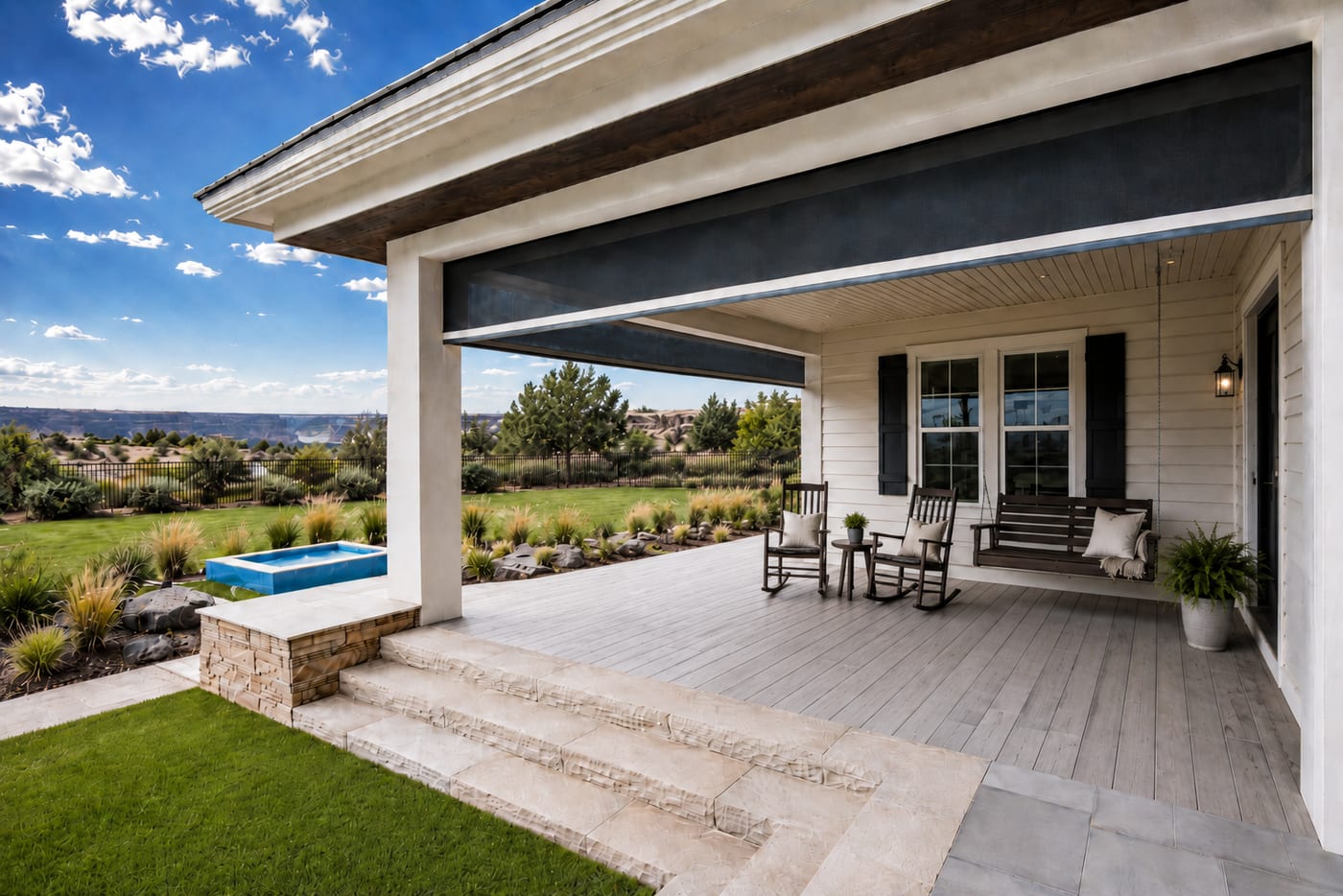
Extruded aluminum housing and track. A tensioning system that holds the mesh flat and square across the span. Custom fabrication to your measured opening. Professional installation, confirmed to operate across the full range of travel. On motorized systems, add the motor, controls and optional wind and sun sensors.
None of that is optional cost. A retractable screen that binds, sags or drops out of its track is a screen that failed on one of those points — usually tensioning or installation.
The Comparison That Actually Matters
The useful comparison is not retractable against fixed on day one. It is total cost across the years you will own the house.
A fixed screen replaced every few seasons as UV embrittles it, plus the view compromised the entire time, is a different proposition from a structure installed once with mesh serviced occasionally. Which comes out ahead depends entirely on how long you are staying and how exposed the opening is — which is why the honest answer varies by household rather than being a slogan.
What It Changes Day to Day
Cost arguments are easy to make abstractly. The practical difference shows up in how a room gets used.
An opening with a fixed screen tends to be treated as a window that happens to open. An opening with a retractable screen tends to get left open — because there is nothing between you and the outside when the screen is retracted, and nothing to look through when it is deployed.
In this climate that matters for a specific reason. Southern Idaho summers cool off substantially after sundown, and the evening is when the air is worth having. A screen that makes it effortless to open up a patio door at eight o'clock is a screen that changes how the room works for three months a year. That is difficult to put a number against, and it is the reason most people who install them on one opening come back for the rest.
What It Does Not Do
Worth setting expectations honestly, because overselling this category is common.
A retractable screen is not a security product. It keeps insects out and lets air in; it is not a barrier and should not be treated as one.
It is not insulation. Solar mesh meaningfully reduces heat gain and glare through an opening, but it is not glazing and will not perform like it.
And it is not maintenance-free — just low-maintenance. The bottom track needs to stay clear of grit so the screen seats and glides properly, which in high-desert country with blowing dust means clearing it occasionally rather than never.
A Practical Way to Decide
Stand at the opening and ask three questions.
Is there a view here I would rather not look through mesh at? Will I use this opening often enough that how it operates matters? Will the screen take sun and wind when it is not in use?
Two or three yeses and a retractable screen earns its price comfortably. One or none and a fixed screen is the honest recommendation — and we will say so during the quote rather than selling you the upgrade anyway.
Next Steps
For actual starting prices, see What Phantom Screens Cost. To understand what moves the number on your specific openings, read What Drives the Price of a Retractable Screen. If you are weighing powered operation, Motorized Retractable Screen Pricing covers that trade.
Or request a free quote and we will look at your openings with you — including telling you which ones do not need us.
Starting prices are current for Phantom Screens of Twin Falls and include professional installation. Final pricing is confirmed after an in-home measurement.
Frequently Asked Questions
Are retractable screens worth the extra cost over fixed screens? On openings with a view worth preserving, frequent use, or real sun and wind exposure, generally yes — the mesh lasts longer because it is stored, and the structure is serviceable rather than disposable. On a rarely-opened utility window, a fixed screen is the better spend.
How long do retractable screens last? The aluminum housing, track and structural components are built to outlast multiple mesh cycles, which is why they carry a limited lifetime component warranty. Mesh has a shorter service life depending on exposure and use, and is replaced independently.
Do retractable screens block the view? Only while deployed, and standard insect mesh keeps the outward view clear. Retracted, the mesh is fully inside its housing and the opening is unobstructed.
What happens when the mesh wears out? It is replaced on its own — the housing, track and motor stay in place. It is a service call rather than a reinstallation, and it is also the natural moment to change mesh type if your needs have changed.
Is a retractable screen worth it on a rental property? It depends how long you are holding it. The value shows up across years of use and a mesh service cycle, so on a property changing hands soon the case is weaker.
Are retractable screens good in windy areas? Yes, and arguably better than fixed screens — they retract out of the wind entirely when not in use. On exposed sites, a motorized system with a wind sensor retracts automatically when gusts arrive.
Tags
Written by
Phantom Screens of Twin Falls Team
Custom retractable screen solutions for homes across Idaho and Western Wyoming.
Related Articles
Pet-Resistant Retractable Screens
What pets actually do to screens, how pet-resistant mesh and mesh retention differ, which of the two you need, and what each costs.

Screen Mesh Options Explained
Insect, solar, privacy, no-see-um, pet-resistant and clear vinyl — what each does, what it trades away, and how to match one to a specific opening.

Retractable Screens for Large & Oversized Openings
Openings past 96 inches need a different system. What covers up to 15 feet wide and 12 feet high, how spans divide, and what oversized systems cost.
Interested in Retractable Screens?
Get a free quote for custom Phantom retractable screens — motorized, door, or window screens for your home.
Get a Free Quote