Retractable Screens for Casement Windows
Casement windows swing outward, which rules out a conventional fixed screen on the exterior. How retractable screens solve that, where they mount, and what they cost.

Casement windows create a specific screening problem. They crank outward on a hinge, which means the sash sweeps through the space where an exterior screen would sit. Put a conventional screen on the outside and the window cannot open.
The conventional answer is a fixed interior screen, permanently in the frame, sitting between you and the view for the whole year. A retractable screen solves the same problem without that trade.
Why Casements Are Different
Most window types open within their own footprint. A double-hung slides vertically; a slider moves horizontally; neither intrudes on the space in front of the glass.
A casement rotates out. Depending on the hardware, the sash can swing well clear of the frame — which is exactly what makes casements good at catching cross-breezes, and exactly what rules out an exterior screen.
The same applies to awning windows, which hinge at the top and push out at the bottom, and to most crank-operated styles. If your window opens by turning a handle rather than sliding, it is in this category.
Where the Screen Mounts
On the interior side of the opening, clear of the sash's travel. The window opens outward into open air; the screen sits inside, doing its job without ever touching the moving part.
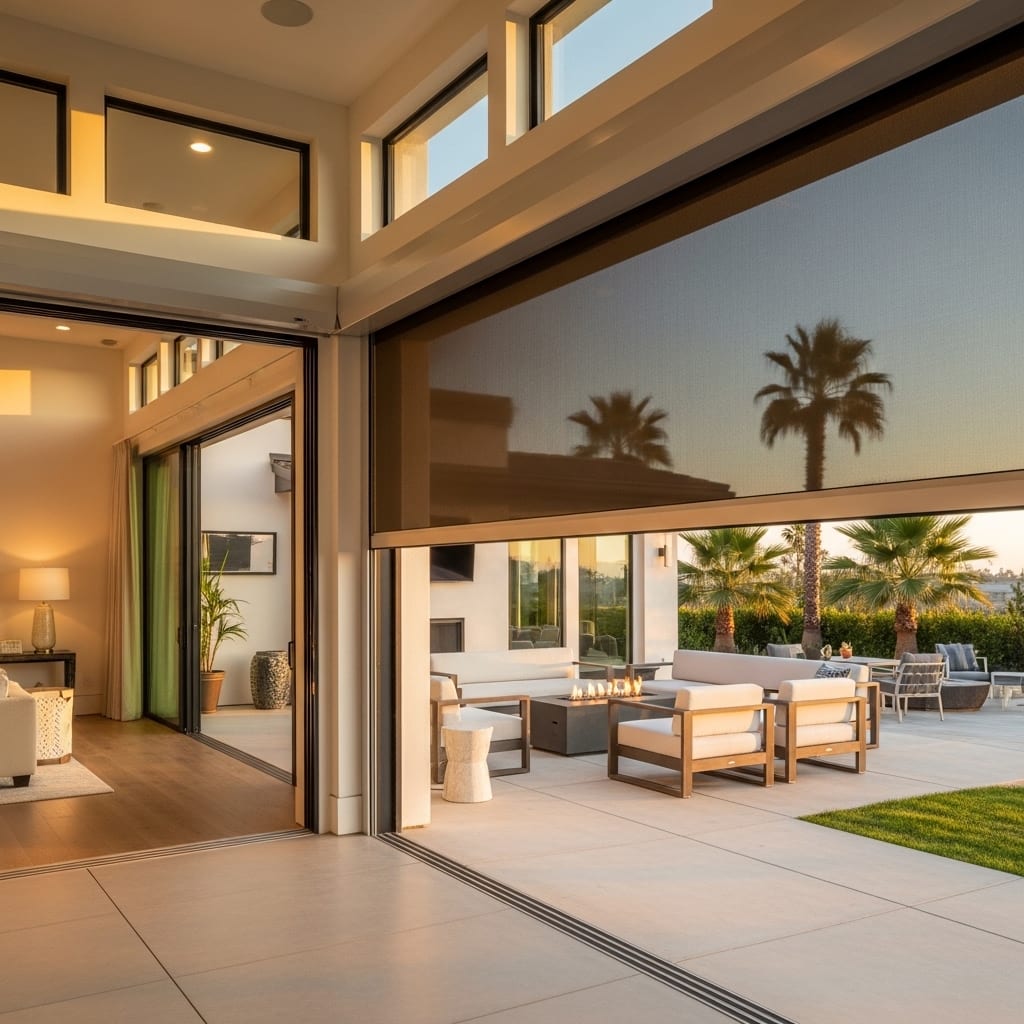
The mesh stores on a roller inside a slim 2.5-inch aluminum housing mounted at one side of the opening, and draws across on tracks top and bottom. Crank the window open, draw the screen across, and you have airflow without insects. Close the window and the screen retracts out of sight.
Where frame depth allows, the housing can sit within the existing jamb — an in-jamb installation — so no hardware reads against the wall when the screen is retracted. Where depth is tighter, a surface mount is used instead. Which applies is established during the measurement, not assumed.
Reaching the Crank
The practical detail people ask about most: if the screen is on the inside, how do you operate the window?
The answer is that you retract the screen, crank the window, and redeploy — which takes a few seconds and is the same sequence you would use with any interior screen. Because a retractable screen moves out of the way completely rather than needing removal, it is considerably less awkward than lifting out a fixed interior panel.
Where the crank handle sits close to the jamb, the position of the housing matters, because the handle needs clearance through its full rotation. That is another reason casements get measured on site rather than ordered from dimensions — hardware placement varies between manufacturers and between windows in the same house.
Sizes and What Fits
Retractable window screens are custom-built to each opening, in widths from roughly 13.25 to 84 inches and heights up to 90 inches. That range covers effectively every residential casement and awning window.
They work with the common window manufacturers found in homes across the Magic and Treasure Valleys — including Andersen, Pella, Marvin and Milgard units — because the screen mounts to the opening rather than integrating with the window's own hardware.
Every screen is built to the opening as measured, so out-of-square windows are handled as routine rather than as an obstacle. In older Twin Falls homes, where settling is normal, that matters more than it sounds.
Choosing Mesh for a Casement
Casements are often specified where airflow is the priority — which shapes the mesh decision.
Standard insect mesh maximises airflow and keeps the view clear. The right default for most casements, and included in the price.
Solar mesh blocks a meaningful share of heat, UV and glare while keeping the outward view. Worth it on south- and west-facing casements, which take direct high-desert sun through the afternoon. The trade is a slight reduction in airflow and view clarity.
No-see-um mesh uses a tighter weave to exclude the smaller insects that pass through standard mesh. Relevant near the Snake River, canals and standing water — and worth considering on bedroom casements, which tend to be opened at exactly the hours those insects are active.
Mesh is specified per window, so a west-facing casement can carry solar while the north side stays standard.
Replacing a Failed Casement Screen
Most casement screening enquiries start with an existing screen that has stopped working — torn mesh, a bent frame, or a panel that no longer sits properly in its clips.
Interior casement screens take more handling than most window screens, because they get removed and refitted whenever anyone cleans the glass. That handling is what eventually loosens the frame and stresses the mesh at the corners.
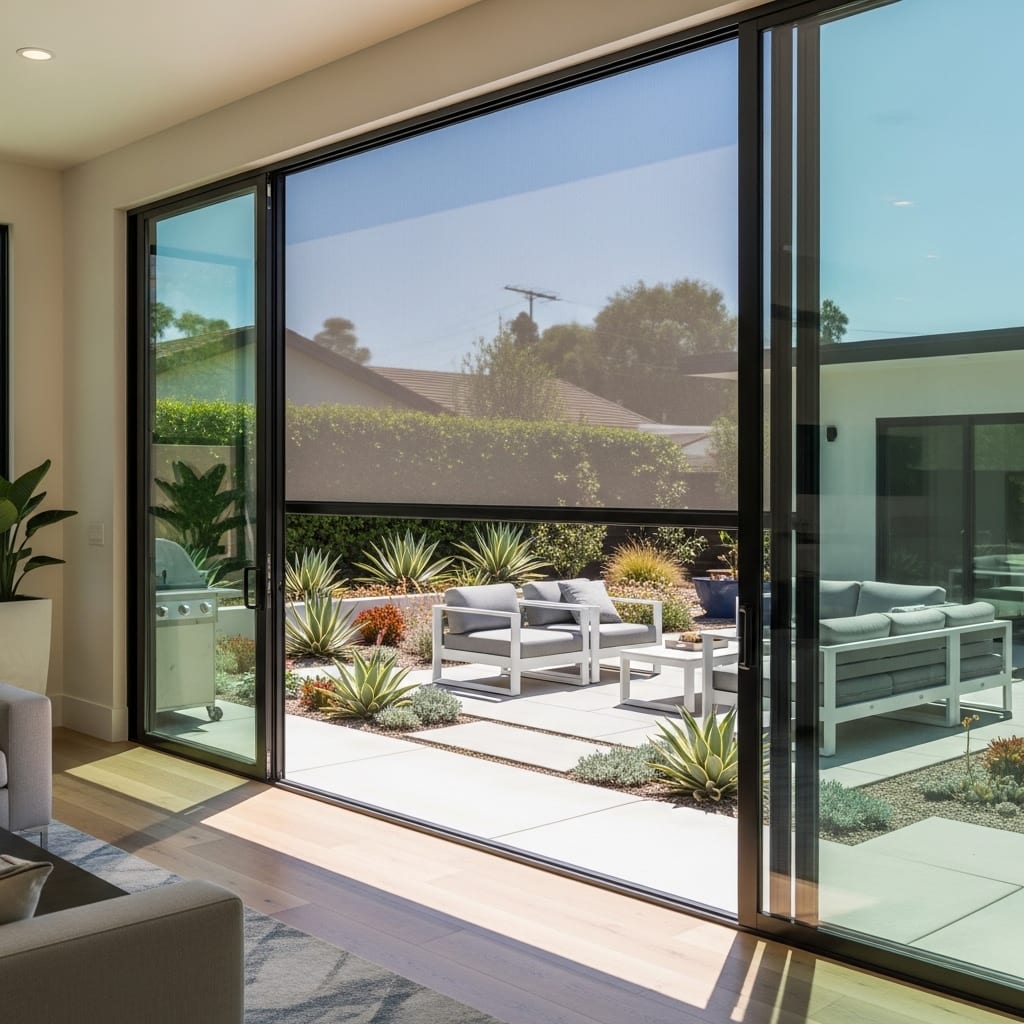
A retractable screen removes that failure mode entirely. Nothing is lifted out to clean the window — the screen retracts, the glass is accessible, and the mesh is never handled at all.
What It Costs
Window screens are quoted per opening after measurement, since size varies considerably across a house. For context on the wider range, a single retractable door screen starts at $989 including installation, and full pricing across every configuration is in What Phantom Screens Cost.
Openings roughly 96¼ to 120 inches tall carry a $200 adjustment, though that applies to few casements. A $200 deposit starts an order and is applied to the total.
Every installation carries a limited lifetime warranty on components, a 7-year warranty on motors, and a 24-month labor warranty. Screen mesh is not covered under the component warranty, but it can always be repaired or replaced.
Casements and Cross-Ventilation
Casements are the best window type in the house for moving air, and that is worth exploiting when deciding which ones to screen.
Because the sash swings out into the airflow, a casement acts as a scoop — catching a breeze passing across the face of the house and directing it inside. A double-hung in the same wall, opening flat within its frame, catches far less. That is the reason casements get specified on the windward side of a house in the first place.
The practical consequence is that screening casements has an outsized effect on how a house ventilates in summer. In southern Idaho, where evenings cool substantially after sundown, being able to open the windows that actually move air — without inviting everything outside in — is what makes overnight cooling viable instead of running air conditioning through the night.
If you are prioritising, the casements on the prevailing-wind side are usually the ones to do first. They do the most work.
Which Windows Are Worth Doing
Not every casement in a house needs a retractable screen, and it is worth being deliberate.
The ones that justify it are the casements you actually open — bedrooms for night air, kitchens for ventilation, and any window on a view you would rather not look through mesh at. Those are the openings where retracting the screen delivers something a fixed panel cannot.
Casements that are rarely opened, or that face a fence with nothing to look at, are served perfectly well by a conventional screen. Spending there rather than on the windows you use daily is the more common mistake.
Next Steps
For how retractable window screens work generally, read What Are Retractable Window Screens and How Do They Work? For fitting other window styles, see Retractable Window Screens by Window Type, or browse window screens.
Request a free quote and a specialist will measure your casements and confirm the mounting approach.
Starting prices are current for Phantom Screens of Twin Falls and include professional installation. Final pricing is confirmed after an in-home measurement.
Frequently Asked Questions
Can you put a retractable screen on a casement window? Yes. Because casements crank outward, the screen mounts on the interior side, clear of the sash's travel, and retracts into its housing when the window is closed.
How do I reach the crank with a screen fitted? Retract the screen, operate the window, then redeploy. It takes seconds, and unlike a fixed interior screen nothing has to be lifted out.
Do retractable screens fit awning windows? Yes. Awning windows hinge at the top and push out at the bottom, so like casements they take an interior-mounted screen.
What sizes are available? Custom-built from roughly 13.25 to 84 inches wide and up to 90 inches tall, which covers essentially all residential casement and awning windows.
Will it work with my window brand? Retractable screens mount to the opening rather than to the window's own hardware, so they work with common manufacturers including Andersen, Pella, Marvin and Milgard.
What if my window opening is not square? Every screen is custom-built to the opening as measured, so settling and out-of-square openings are handled as a matter of course.
Why do interior casement screens fail so often? Because they are removed and refitted every time the glass is cleaned, which loosens the frame and stresses the mesh at the corners over time. A retractable screen is never handled, so that failure mode does not apply.
Tags
Written by
Phantom Screens of Twin Falls Team
Custom retractable screen solutions for homes across Idaho and Western Wyoming.
Related Articles

Pet-Resistant Retractable Screens
What pets actually do to screens, how pet-resistant mesh and mesh retention differ, which of the two you need, and what each costs.

Screen Mesh Options Explained
Insect, solar, privacy, no-see-um, pet-resistant and clear vinyl — what each does, what it trades away, and how to match one to a specific opening.

Retractable Screens for Large & Oversized Openings
Openings past 96 inches need a different system. What covers up to 15 feet wide and 12 feet high, how spans divide, and what oversized systems cost.
Interested in Retractable Screens?
Get a free quote for custom Phantom retractable screens — motorized, door, or window screens for your home.
Get a Free Quote