Retractable Window Screens by Window Type
Single-hung, double-hung, casement, awning, sliding and picture windows each screen differently. What changes by window type, what fits, and which windows are worth doing.

"Window screen" describes a category, not a fit. How a screen mounts depends entirely on how the window opens — and getting that wrong produces a screen that fouls the sash, blocks the hardware, or simply cannot be operated.
Here is what changes by window type.
Single-Hung and Double-Hung
The most common residential window in the region, and the most straightforward to screen.
A single-hung has one operable sash, usually the bottom. A double-hung has two, both sliding vertically within the frame. In both cases the window opens within its own footprint — nothing swings out — so the screen has clear space to work in.
The screen mounts within the frame depth where available, drawing across the opening on tracks top and bottom. Because the sash moves vertically and the screen moves horizontally, the two never interact.
The practical advantage over a conventional half-screen is coverage. A standard hung-window screen typically covers only the half that opens; a retractable screen covers the full opening, which matters on a double-hung where both sashes operate.
Casement and Awning
These crank outward, which rules out an exterior screen entirely — the sash sweeps through exactly that space.
The screen mounts on the interior, clear of the sash's travel. Operating the window means retracting the screen, cranking, and redeploying.
The detail that matters here is crank clearance. The handle needs room through its full rotation, and handle placement varies between manufacturers, so housing position is decided at the window rather than from dimensions.
Covered in more detail in Retractable Screens for Casement Windows.
Sliding Windows
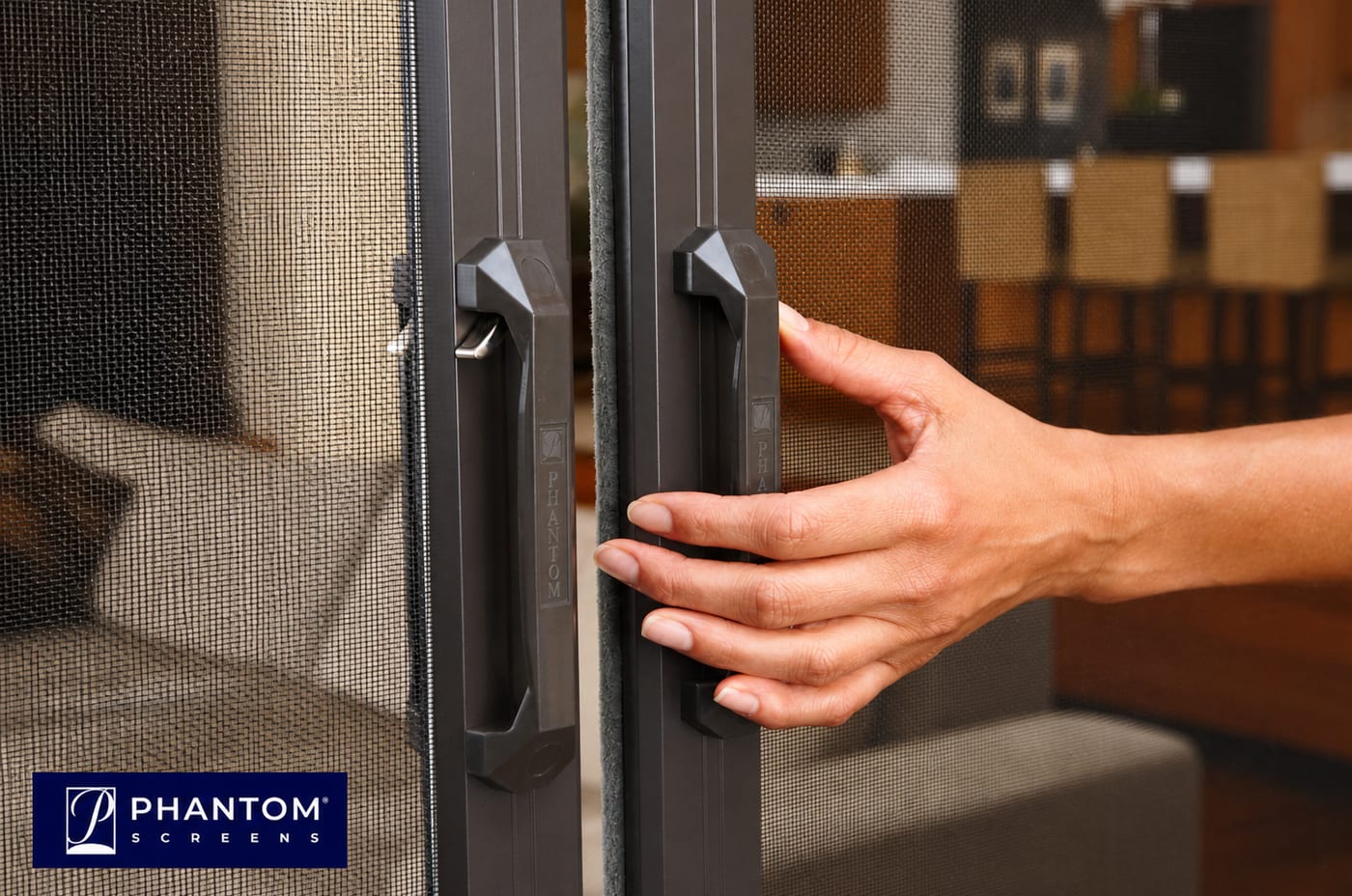
Horizontal sliders work much like sliding doors at smaller scale. One sash slides past a fixed panel, and the screen travels across the operable portion.
The advantage over the factory screen is the same as on a patio slider: a conventional sliding-window screen shares the window's own track, which is why it works loose and comes out of its channel over time. A retractable screen has its own track and its own tension.
Picture and Fixed Windows
Worth stating plainly — these do not need screens. A window that does not open cannot admit insects, so a screen on a picture window is cost with no function, and it puts mesh across a view that was presumably the reason for a picture window in the first place.
Where a picture window is flanked by operable casements, screen the casements and leave the fixed centre clear.
Specialty and Odd Shapes
Arched tops, trapezoids and other architectural shapes are common in newer construction around the valleys.
The usable rule: if the opening portion is a conventional rectangle, it can be screened, even where the overall window is not. Many arched windows are a fixed arch above a rectangular operating sash, and the sash is the part that matters.
Where the operating portion is itself an unusual shape, it becomes a site-specific question rather than a catalogue answer.
Sizes Across All Types
Retractable window screens are custom-built from roughly 13.25 to 84 inches wide and up to 90 inches tall. That covers the overwhelming majority of residential windows of every style.
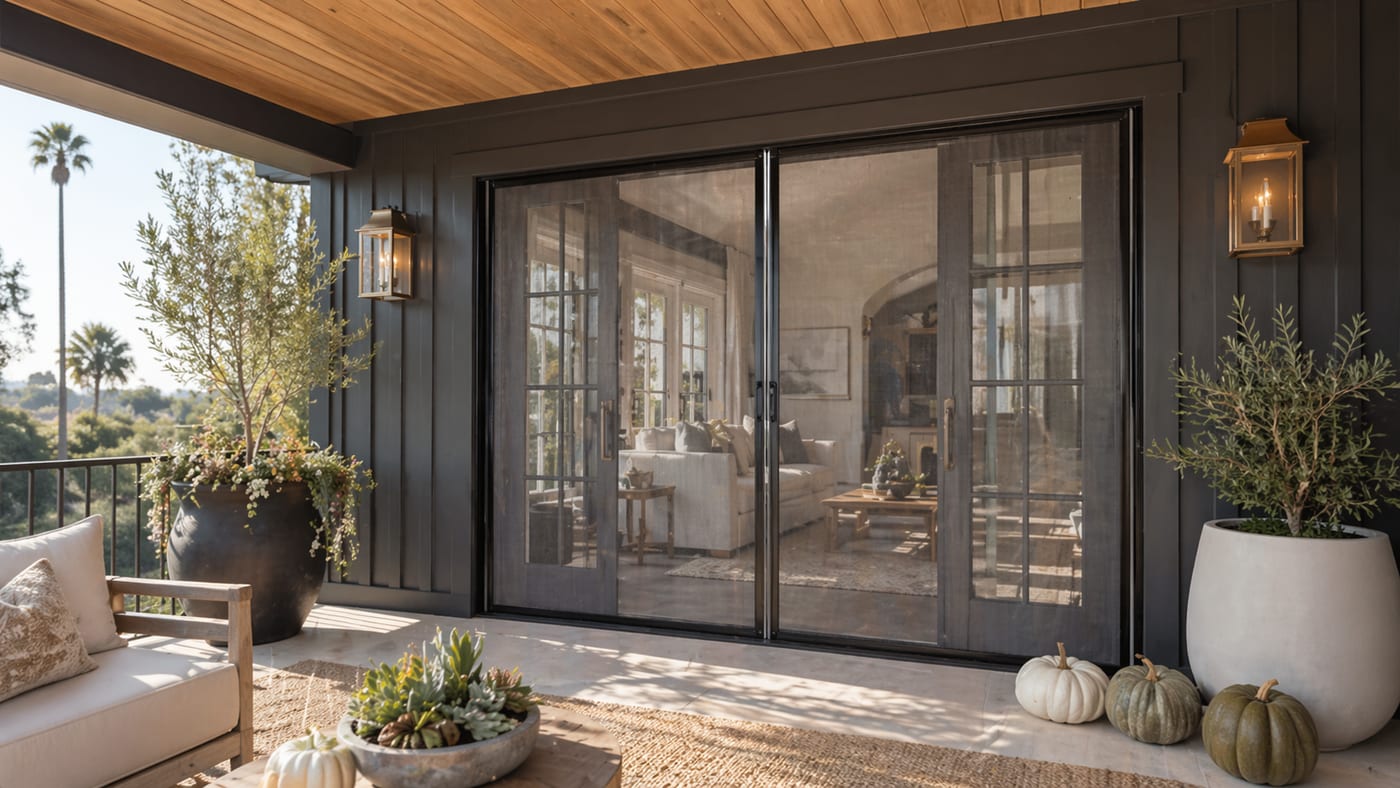
Larger openings move into door-screen territory, which covers up to 96 inches wide and 120 inches tall — relevant for oversized picture-window walls where an operable section is unusually large.
In-Jamb or Surface Mount
Two mounting approaches, and which applies depends on the window rather than on preference.
An in-jamb installation fits the housing within the existing frame depth, so nothing reads against the wall when the screen is retracted. This is the cleaner result and the default where the frame allows it.
A surface mount attaches the housing to the face of the wall alongside the frame. Used where frame depth is insufficient — common on older windows and on some vinyl replacement units with shallow jambs.
Frame depth is measured rather than estimated, because the difference is visible on a window you look at every day.
What Changes on Older Windows
Twin Falls and the surrounding valleys have a lot of housing stock old enough that the windows have moved, and that affects screening in three specific ways.
Openings are rarely square. Houses settle, and a window that was square when installed may be a quarter-inch out across the diagonal decades later. Because every screen is built to the opening as measured, this is routine rather than a problem — but it is the reason a screen ordered from nominal dimensions binds or gaps.
Frame depth is often shallower. Older wood windows and early vinyl replacements frequently do not have the jamb depth for an in-jamb installation, which means a surface mount. That is a visual difference worth knowing about before installation day rather than after.
Original wood needs different anchoring. Old-growth wood behaves differently from modern framing lumber and from vinyl, and the fixing approach reflects that. It is one more thing established by someone looking at the window.
None of this rules out older homes. It is the reason the measurement happens at the house.
Which Windows Are Worth Screening
Most houses do not need every window done, and phasing is entirely reasonable.
Worth doing: bedrooms, where night air is the point; kitchens, for ventilation while cooking; any window on a view worth preserving; and windows you open daily through summer.
Usually not worth doing: basement egress windows, obscure-glass bathroom windows, windows facing a fence with no view, and anything opened twice a season. A conventional screen serves those adequately.
Screening the windows you actually use first, and adding others later, is a sensible approach. Having everything measured in one visit means later windows are quoted accurately when you come to them.
Screening Upper-Floor Windows
Second-storey windows raise a question that ground-floor ones do not: is a screen doing anything useful up there?
Insects reach upper floors readily, so the bug argument holds. What changes is everything else about how those windows get used.
Upper-floor windows are usually bedrooms, which are the windows most likely to be opened overnight and least likely to be opened during the day. That pushes the mesh choice toward no-see-um rather than solar, since the hours they are open are the hours smaller insects are active and the sun is not a factor.
They are also harder to reach for maintenance, which is an argument in favour of retractable rather than conventional screens. A screen that never needs lifting out to clean the glass is worth more on a second-floor window than on one you can reach from the ground.
One safety note worth stating plainly: a window screen of any kind is not a fall barrier and should never be treated as one. That applies equally to conventional and retractable screens, and it matters most on exactly these upper-floor bedroom windows.
Mesh by Room, Not by House
Because mesh is specified per opening, it is worth matching to each room rather than picking one for the whole house.
Bedrooms often benefit from no-see-um mesh, being opened at dusk when smaller insects are active. West-facing living spaces benefit from solar mesh against afternoon sun. North-facing rooms are usually best on standard insect mesh, which maximises airflow and view clarity.
Next Steps
For how the mechanism works, read What Are Retractable Window Screens and How Do They Work? For casements specifically, see Retractable Screens for Casement Windows. For mesh options and when to replace, read When to Replace Your Screen Mesh.
Request a free quote and a specialist will walk the house and recommend which windows are worth doing.
Starting prices are current for Phantom Screens of Twin Falls and include professional installation. Final pricing is confirmed after an in-home measurement.
Frequently Asked Questions
Do retractable screens fit all window types? They fit all operable types — single-hung, double-hung, casement, awning, sliding and most specialty shapes with a rectangular operating sash. Fixed picture windows do not need screens.
What sizes are available? Custom-built from roughly 13.25 to 84 inches wide and up to 90 inches tall, which covers the large majority of residential windows.
What is the difference between in-jamb and surface mount? In-jamb fits the housing within the existing frame depth so no hardware shows against the wall. Surface mount attaches to the wall face and is used where frame depth is insufficient.
Do I need to screen every window? No. The windows worth doing are the ones you open regularly and the ones with a view worth preserving. Rarely-opened and no-view windows are served fine by conventional screens.
Can different windows have different mesh? Yes, and they usually should. Mesh is specified per opening, so bedrooms, west-facing living spaces and shaded rooms can each get what suits them.
Will a retractable screen cover a full double-hung window? Yes. Unlike a conventional half-screen that covers only the operable sash, a retractable screen covers the full opening — which matters when both sashes operate.
Tags
Written by
Phantom Screens of Twin Falls Team
Custom retractable screen solutions for homes across Idaho and Western Wyoming.
Related Articles

Pet-Resistant Retractable Screens
What pets actually do to screens, how pet-resistant mesh and mesh retention differ, which of the two you need, and what each costs.
Screen Mesh Options Explained
Insect, solar, privacy, no-see-um, pet-resistant and clear vinyl — what each does, what it trades away, and how to match one to a specific opening.

Retractable Screens for Large & Oversized Openings
Openings past 96 inches need a different system. What covers up to 15 feet wide and 12 feet high, how spans divide, and what oversized systems cost.
Interested in Retractable Screens?
Get a free quote for custom Phantom retractable screens — motorized, door, or window screens for your home.
Get a Free Quote