Retractable Screens for Patio Doors
Patio doors take more traffic and more direct sun than any other opening in the house. What that means for screen choice and mesh, and whether you should screen the door or the whole patio.

"Patio door" covers a slider, a French pair, or a bi-fold — whatever opens onto the outdoor space. What they share is that they take more traffic than any other door in the house and, in most southern Idaho homes, considerably more direct sun.
Both of those should shape what you specify, and both are routinely ignored in favour of picking whatever the standard option is.
Traffic Changes the Specification
A patio door in summer gets used constantly — people in and out, children, dogs, trays of food, hands full. A screen on that door is not a passive component sitting in a frame. It is being operated dozens of times a day and pushed against regularly.
This is where Mesh Lock earns its cost. A standard door screen lets the mesh float along the track, which is entirely fine on a door nobody leans against. On the door a labrador shoulders through twice an hour, the mesh needs to be secured into the track edges so it resists that lateral pressure.
It adds $250 on a single and $500 on a double. On a high-traffic patio door it is usually the best-value line in the quote — and declining it is how people end up paying a $150 service call plus mesh repair a season later.
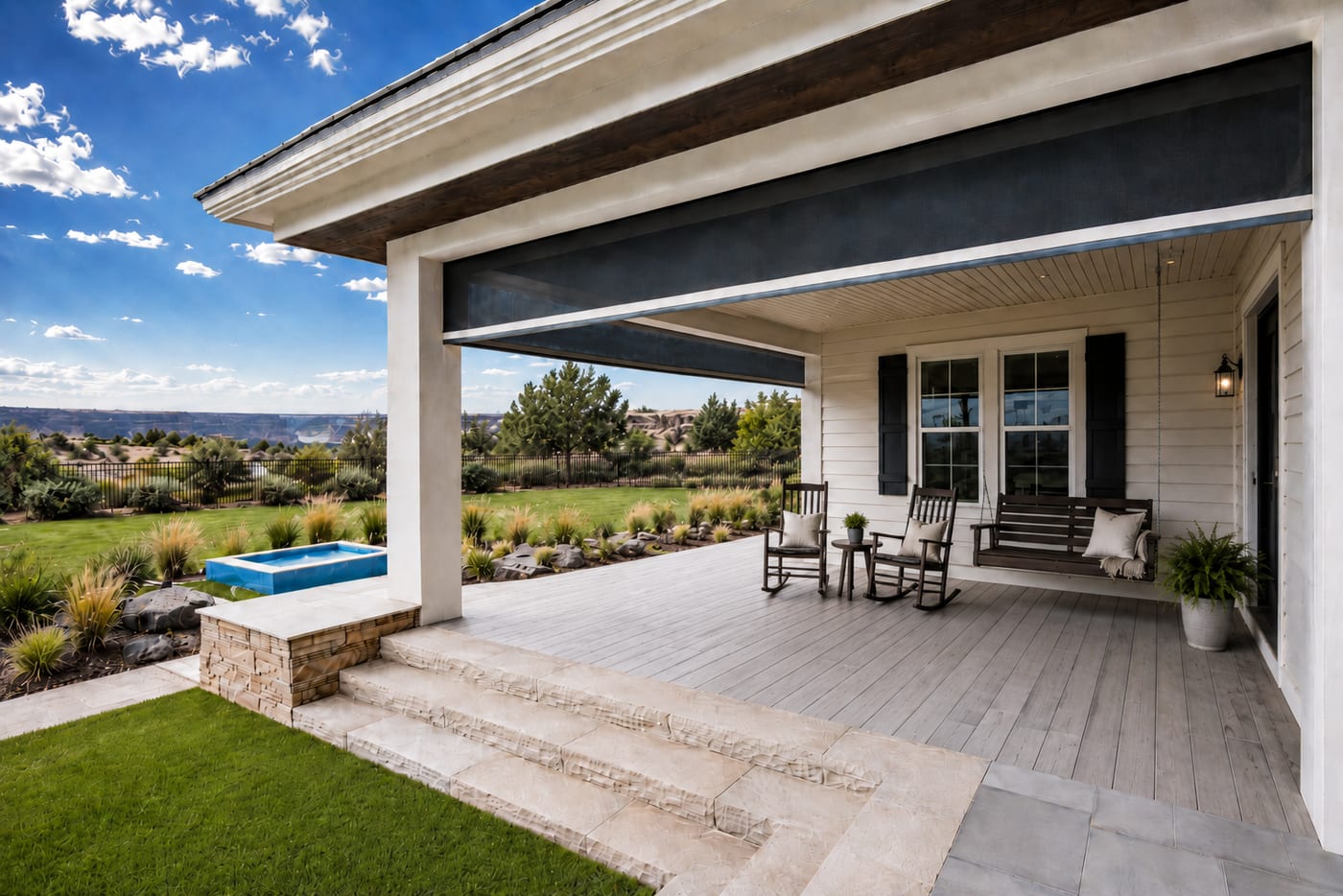
Sun Changes the Mesh
Most patio doors in this region face south or west, which means direct high-desert sun for the whole afternoon.
Standard insect mesh gives the clearest view and the best airflow. It is the right default where the door is shaded or north-facing, and it is included in the price.
Solar mesh blocks a substantial share of heat, UV and glare while keeping the outward view. On a west-facing patio door it changes how usable the room behind it is from mid-afternoon onward in July, and it slows the fading that direct sun does to flooring, rugs and furniture.
This is the specification decision people most often regret, because it cannot be changed later without a mesh replacement. A room that becomes unusable at four o'clock is a problem solar mesh would have solved at the point of order.
No-see-um mesh uses a tighter weave to exclude the smaller insects standard mesh admits — worth specifying near the Snake River, irrigation canals, or standing water, where those are the actual nuisance.
Mesh is chosen per opening, so the patio door can run solar while the bedroom windows stay on standard insect mesh.
Matching the Screen to the Door
- Single slider — one screen across the opening, from $989.
- French pair — two screens meeting at the centre, from $1,949. See French Door Screens.
- Wide or multi-panel — past 96 inches, an oversized system covering up to 15 feet wide and 12 feet high in one screen.
- The whole patio opening — a motorized screen across the entire span rather than the doorway alone, from $4,200 manual or $5,400 motorized.
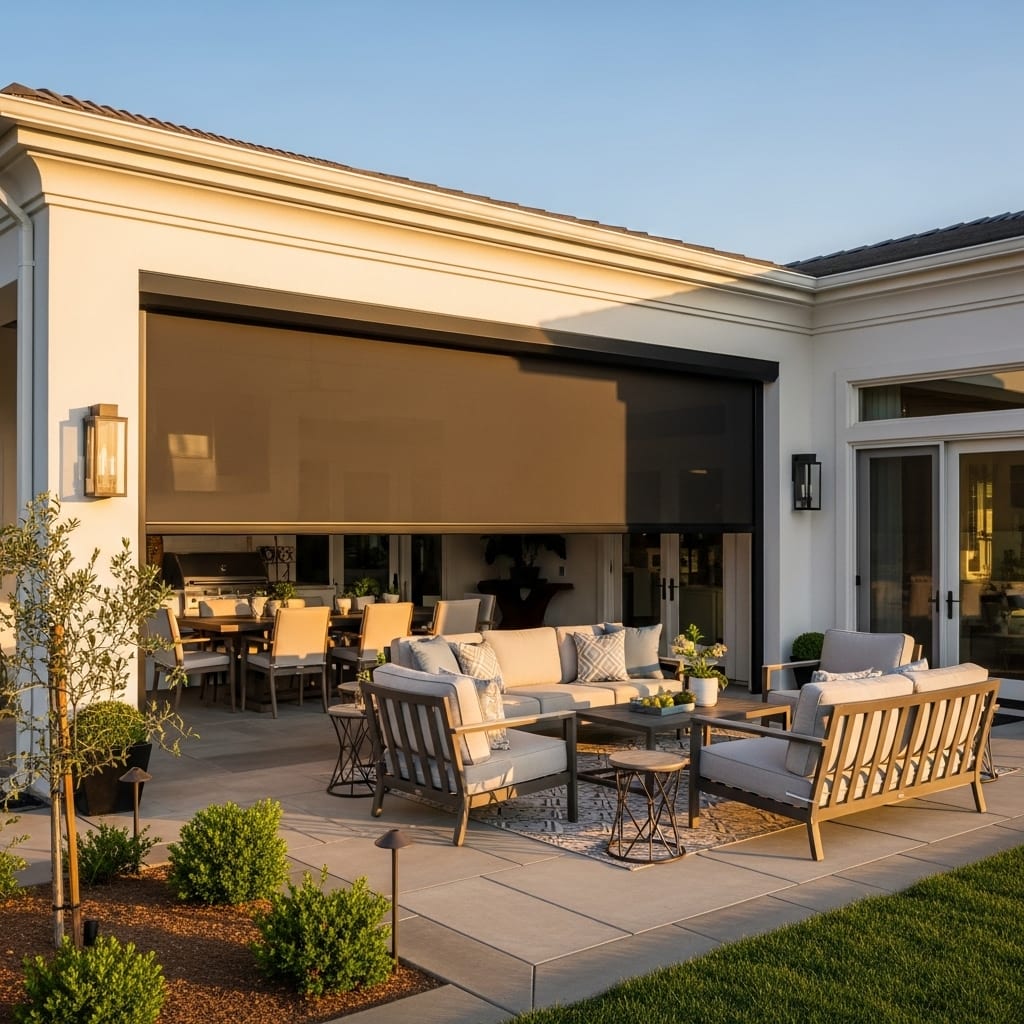
Screening the Doorway, or the Whole Patio?
Worth separating these clearly, because people frequently start by asking about one and actually want the other.
A door screen screens the doorway. Insects stay out of the house. The patio itself remains open air — which is fine if the patio is comfortable as it is.
A large-opening or motorized screen screens the outdoor space itself, turning a covered patio into a usable room and adding wind and sun control. Different product, different price, different result.
The question that separates them: is the problem insects getting into the house, or is the problem that the patio is unpleasant to sit on? If it is the second, a door screen will not fix it no matter how good the door screen is.
On exposed sites there is a further argument for the motorized version — a wind sensor retracts the screen automatically when gusts arrive, including when nobody is home. Along the canyon rim and out toward the open ground, that is not a luxury feature.
Bi-Fold and Multi-Panel Patio Doors
Folding and stacking patio doors have become common on newer builds and remodels around the Magic and Treasure Valleys, and they change the screening problem.
A bi-fold or accordion door opens the entire wall. That is the appeal — and it is also why a conventional door screen has nothing to attach to across most of the opening. Once the panels are folded back, there is no frame in the middle to mount anything on.
The answer is a single screen spanning the whole opening rather than a screen per panel. An oversized system covers up to 15 feet wide and 12 feet high in one screen, which handles most residential bi-folds, stacking glass walls and lift-and-slide systems — including the door systems from La Cantina, NanaWall, Marvin and Pella.
Two things are worth knowing before you get quotes on one of these. First, it is a different product from a door screen, priced differently — from $4,200 manual. Second, a single screen across a wide span depends entirely on its tensioning system to stay flat and track properly, which is why the track quality question matters far more here than on a standard door.
Getting the Timing Right
One practical note. Screens are specified, fabricated and installed — it is not same-week work, and the busiest period is exactly when everyone realises they want one, which is the first genuinely warm stretch of the year.
If you know you want the patio usable by summer, starting the conversation in late winter or early spring means you are installing before the season rather than partway through it.
Two Doors Onto One Patio: Screen Both?
Plenty of homes open onto the same patio from two places — a slider from the living room and a second door from the kitchen or a bedroom.
Screening only one does less than people expect. Insects are not entering through a specific door; they are entering through whichever opening is unscreened, and a household will keep using both doors regardless of which one has a screen on it. The practical result is that the screened door gets treated as "the good one" and the problem is unchanged.
The cost of the second is usually lower than expected relative to the benefit, since it is another single at $989 rather than a second large system. And because mesh is specified per opening, the two do not have to match — a west-facing slider might take solar mesh while a shaded side door stays on standard insect mesh.
Screens can also be phased. There is nothing structural about doing the main slider this season and the second door next, and specifying both at the same measurement means the second one is quoted accurately when you come to it.
What It Costs
Patio door screens start at $989 for a single and $1,949 for a French pair, installation included. Full pricing is in What Phantom Screens Cost, and the variables are broken down in What Drives the Price of a Retractable Screen.
Request a free quote and a specialist will measure the opening and recommend mesh based on how that door actually gets used rather than on what is standard.
Starting prices are current for Phantom Screens of Twin Falls and include professional installation. Final pricing is confirmed after an in-home measurement.
Frequently Asked Questions
What is the best screen for a patio door? For most patio doors, a retractable screen with standard insect mesh — upgraded to solar mesh if the door faces south or west, and with Mesh Lock if pets or children use it constantly.
How much does a patio door screen cost? From $989 for a single slider and $1,949 for a French pair, both including professional installation.
Should I screen the door or the whole patio? A door screen keeps insects out of the house. A large-opening or motorized screen makes the patio itself usable and adds wind and sun control. They solve different problems and are priced differently.
Will solar mesh make the room darker? It reduces glare and heat noticeably while keeping the outward view. On a west-facing door most people find the late-afternoon trade strongly worth it.
Is Mesh Lock necessary on a patio door? Not necessary, but on a high-traffic door with pets or small children it is the upgrade that most reliably extends the life of the mesh.
When should I order if I want it for summer? Screens are custom-fabricated, and demand peaks with the first warm weather. Starting in late winter or early spring means installing before the season rather than during it.
Tags
Written by
Phantom Screens of Twin Falls Team
Custom retractable screen solutions for homes across Idaho and Western Wyoming.
Related Articles

Pet-Resistant Retractable Screens
What pets actually do to screens, how pet-resistant mesh and mesh retention differ, which of the two you need, and what each costs.

Screen Mesh Options Explained
Insect, solar, privacy, no-see-um, pet-resistant and clear vinyl — what each does, what it trades away, and how to match one to a specific opening.

Retractable Screens for Large & Oversized Openings
Openings past 96 inches need a different system. What covers up to 15 feet wide and 12 feet high, how spans divide, and what oversized systems cost.
Interested in Retractable Screens?
Get a free quote for custom Phantom retractable screens — motorized, door, or window screens for your home.
Get a Free Quote