Turning a Porch Into a Three-Season Room
What it takes to get spring and autumn use out of a covered porch in southern Idaho — how mesh and clear vinyl differ, what each season actually needs, and where the limits are.

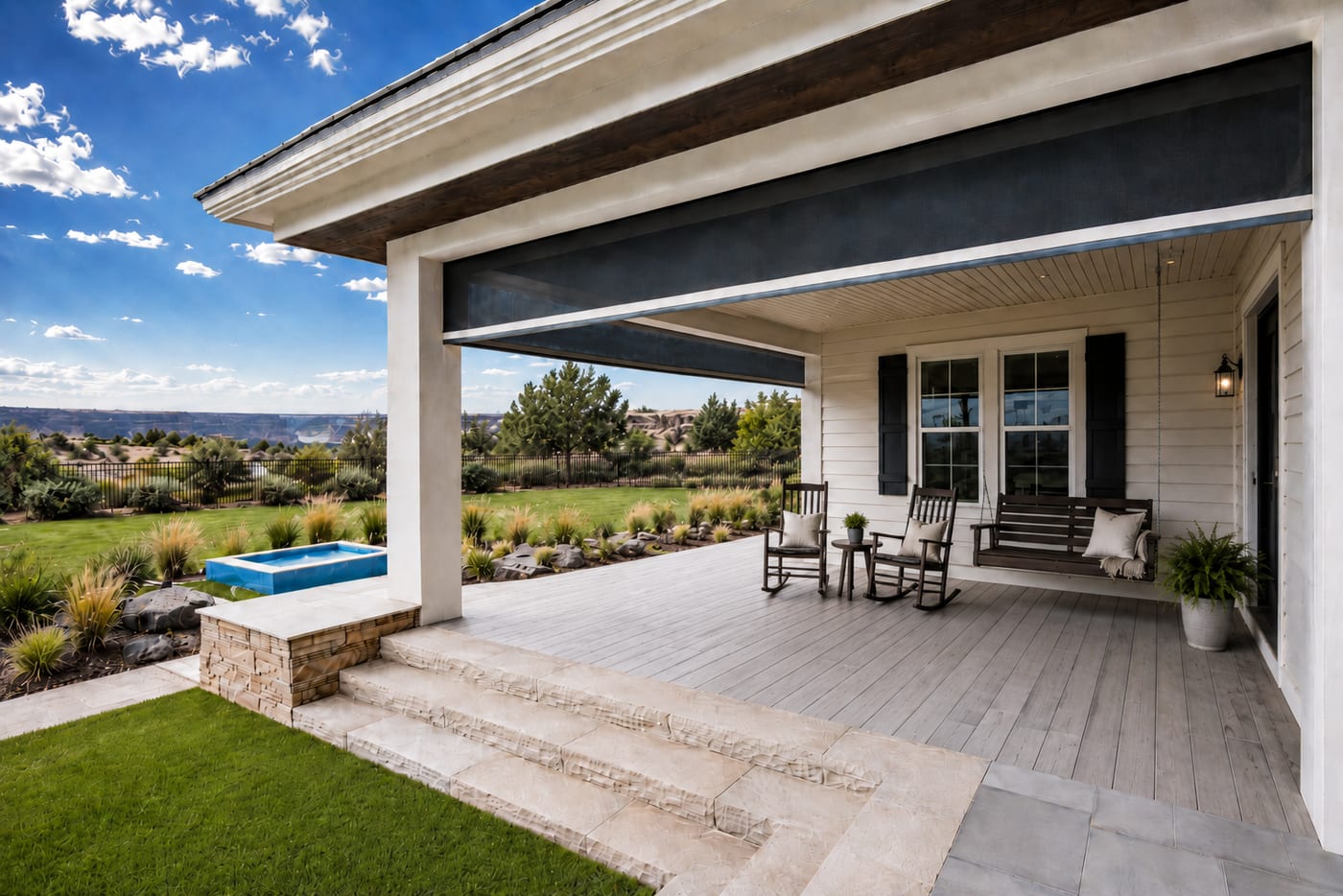
A covered porch in southern Idaho is genuinely comfortable for a fairly narrow window. High summer often means heat and insects; deep winter is out entirely. The stretch people actually lose is spring and autumn — bright, still days that are simply too cool to sit out in.
Getting those months back is what "three-season room" means in practice, and it is mostly a question of what you put in the tracks.
Two Different Problems, Two Different Materials
The mistake people make is assuming a screen is a screen. Mesh and clear vinyl solve opposite problems.
Mesh filters. It keeps insects out while letting air through, which is exactly right in July when the problem is bugs and you want the breeze. It does essentially nothing about temperature.
Clear luxury vinyl blocks. It stops wind and holds warmth in the space, which is what makes an October evening usable. It does not filter insects, because it is a solid panel rather than a weave.
A porch that runs mesh year-round is comfortable in summer and cold in shoulder season. A porch that runs vinyl year-round is warm in spring and stifling in July. Three-season use comes from having both available.
What Each Season Actually Needs
Spring. Bright, often windy, cool in the evenings. Wind is the limiting factor more than temperature — a still 55-degree evening is pleasant, a windy one is not. Vinyl panels do most of the work here.
Summer. Insects and low afternoon sun. Mesh handles the first; solar mesh handles the second on west-facing porches, which in this region take direct sun with real intensity from mid-afternoon.
Autumn. The season most worth reclaiming. Days are often calm and clear, evenings drop quickly. Vinyl holds enough warmth to keep the space usable well past the point the open porch would have been abandoned, and this is where most people notice the return.
Winter. Being straight about it: this is not a four-season solution. Vinyl blocks wind and retains some warmth, but a covered porch is not a conditioned room and will not behave like one through an Idaho January.
Adding Heat
Vinyl panels change what a heater can achieve, and that combination is what genuinely extends the season.
An outdoor heater in an open porch is fighting moving air, and most of its output leaves. The same heater in a space with the wind blocked warms the volume rather than the breeze, which is the difference between a heater that takes the edge off and one that makes the space comfortable.
This is worth planning together rather than sequentially. If a heater is likely, knowing that at specification time affects which openings are worth panelling and which can stay mesh.
How the Configuration Works
On a multi-bay porch, screens are specified per bay. That allows a mix: vinyl on the windward side and mesh on the sheltered side, so the space handles both problems at once without compromising on either.
Each screen retracts independently. The porch is fully open when everything is retracted, which is the whole reason to choose retractable systems over a built enclosure — you keep the open porch on the evenings that deserve one.
Screens cover openings up to 15 feet wide and 12 feet high each, with wider porches divided at the existing posts.
Motorized, and Why It Comes Up Here
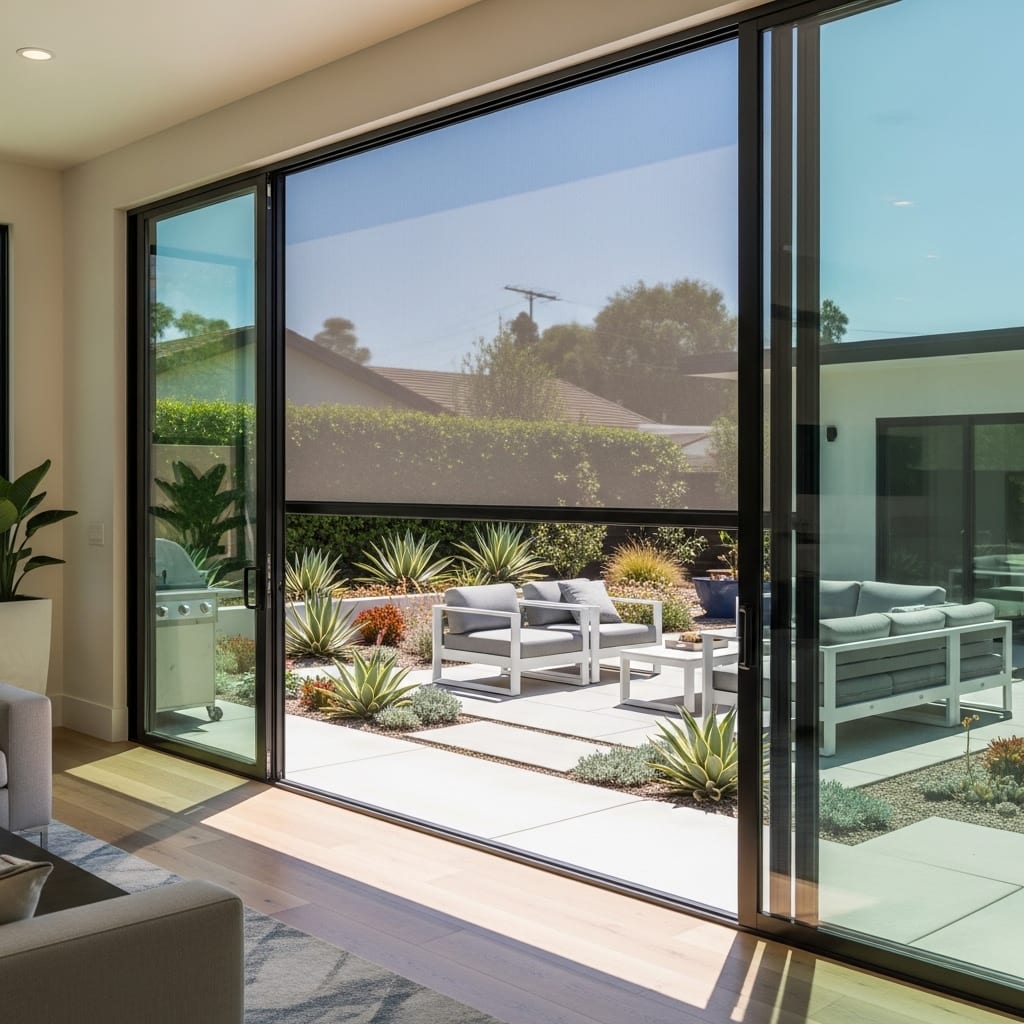
Three-season use means operating the screens far more often than a summer-only installation does — up and down with the weather rather than deployed for a season and forgotten.
That frequency is what makes motorization worth considering at $5,400 against $4,200 manual. A screen you adjust twice a day on a changeable April week is a different proposition from one you set in June.
The wind sensor matters here too, and arguably more in shoulder season than in summer — spring wind in this region arrives fast and often, and a sensor that retracts the screen without anyone present protects the system through exactly the months you are using it most actively.
Which Bays to Panel First
Most porches do not need every bay treated, and phasing is entirely reasonable.
Start with the windward side. In this region that is usually the west or south-west face, and it is the bay doing the most damage to shoulder-season comfort. A single vinyl panel on the prevailing-wind side frequently delivers most of the benefit on its own, because wind is what makes a cool evening genuinely unpleasant rather than merely brisk.
Second priority is whichever bay takes the low afternoon sun, which is often the same one. Where it is, solar mesh and vinyl are competing for the same opening — and the honest answer depends on whether that side is a bigger problem in July or in October.
The sheltered bays, typically those tucked against the house or facing a fence or hedge, can often stay open indefinitely. Screening them adds cost without changing much, and leaving them open keeps the space feeling like a porch.
Because screens are specified and priced per bay, adding the rest later is straightforward. Having everything measured in one visit means the later bays are quoted accurately when you come to them.
What This Does Not Do
Worth stating plainly, because expectations sold badly here lead to disappointment.
This is not an addition. A three-season porch is not insulated, not conditioned, and not a room you will use in deep winter. It does not add finished square footage.
What it does is take a space that was comfortable for perhaps three months and make it comfortable for six or seven. In this climate, that is a substantial change in how much of the year the space earns its existence — and it costs a fraction of building an enclosed room.
Looking After Vinyl Panels
Vinyl needs slightly different care from mesh, and it is worth knowing before you specify it.
Clean it with mild soap and water and a soft cloth — never an abrasive pad or a solvent, both of which cloud the surface permanently. Clarity is the whole reason to choose clear vinyl, so protecting it is the maintenance that matters.
Expect some condensation on cold mornings. A panel holding warmth against cold outside air behaves like any other barrier between two temperatures, and it clears as the day warms.
Retract vinyl in high wind exactly as you would mesh. A solid panel catches considerably more wind than a weave, which is part of why exposed sites lean toward motorized systems with a wind sensor.
What It Costs
Large-opening systems start at $4,200 manual and $5,400 motorized per screen, installed, whether the panel is mesh or vinyl. A porch divided into bays is priced per screen.
Professional installation, custom fabrication and the warranty — limited lifetime on components, 7 years on motors, 24 months on labor — are included.
Full pricing is in What Phantom Screens Cost.
Next Steps
For the broader overview, read Retractable Screens for Patios & Porches. For the structural side, see Screening a Covered Patio.
Request a free quote and a specialist will look at the porch and recommend which bays should carry mesh and which should carry vinyl.
Starting prices are current for Phantom Screens of Twin Falls and include professional installation. Final pricing is confirmed after an in-home measurement.
Frequently Asked Questions
What is a three-season room? An outdoor space usable in spring, summer and autumn — but not deep winter. On a covered porch, that is achieved with clear vinyl panels for wind and warmth in the shoulder seasons and mesh for insects and airflow in summer.
What is the difference between mesh and vinyl panels? Mesh filters insects while letting air through. Clear vinyl blocks wind and holds warmth but does not filter. They solve opposite problems, which is why three-season porches use both.
Can I use the porch in winter? Not really. Vinyl blocks wind and retains some warmth, but a covered porch is not a conditioned room and will not be comfortable through an Idaho January.
Do outdoor heaters work better with panels? Considerably. A heater in an open porch is fighting moving air. With the wind blocked, it warms the space rather than the breeze.
Can I have mesh on some sides and vinyl on others? Yes. Screens are specified per bay, so vinyl on the windward side and mesh elsewhere is a common and sensible configuration.
Does this add square footage to my house? No. It is not an insulated or conditioned addition, and it does not add finished space. It extends how much of the year an existing outdoor space is usable.
Tags
Written by
Phantom Screens of Twin Falls Team
Custom retractable screen solutions for homes across Idaho and Western Wyoming.
Related Articles

Pet-Resistant Retractable Screens
What pets actually do to screens, how pet-resistant mesh and mesh retention differ, which of the two you need, and what each costs.

Screen Mesh Options Explained
Insect, solar, privacy, no-see-um, pet-resistant and clear vinyl — what each does, what it trades away, and how to match one to a specific opening.
Retractable Screens for Large & Oversized Openings
Openings past 96 inches need a different system. What covers up to 15 feet wide and 12 feet high, how spans divide, and what oversized systems cost.
Interested in Retractable Screens?
Get a free quote for custom Phantom retractable screens — motorized, door, or window screens for your home.
Get a Free Quote